
Reflexology FAQ's
Empower. Teach. Heal.Your Foot, Hand, and Ear Reflexology Pain-Breaking Specialists
The Healing Place is located in Medfield, MA USA. We specialize in helping our clients to find long term relief from chronic pain, digestive problems, and hormonal imbalances. Here are some of the most common questions we receive from prospective clients.
Is Reflexology Another Word for “Massage”?
Reflexology is NOT a foot massage.
After months of discussion, research and collaborative thought, The Reflexology Association of America (RAA) Board announced a new definition for reflexology in the United States.
As of 2016 the three largest Reflexology organizations, the American Reflexology Certification Board (ARCB), the National Council of Reflexology Educators (NCRE) and the Reflexology Association of America (RAA) have all agreed to adopt the following definition:
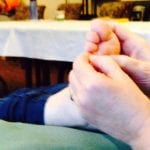
Reflexology is a protocol of manual techniques, such as thumb and finger-walking, hook and backup and rotating-on-a-point, applied to specific reflex areas predominantly on the feet and hands. These techniques stimulate the complex neural pathways linking body systems, supporting the body’s efforts to function optimally. The effectiveness of reflexology is recognized worldwide by various national health institutions and the public at large as a distinct complementary practice within the holistic health field.
Helen Chin Lui is proud to be a member of these organizations that recognize Reflexology as a profession.
Who Can Benefit from Reflexology Sessions?
Everyone can! You don’t need to be ill to benefit. Therapy is helpful for preventive care, alleviates stress, and can bring on overall wellness.
Will Reflexology Cure My Illness?
Reflexology therapy is used primarily to relieve stress. Stress can be the seed for many various diseases and illnesses. It can relax the body to foster optimal function.
Disclaimer – Reflexology cannot diagnose illnesses, prescribe or change medication or herbal remedies. Reflexology can complement traditional therapies.
What are Standard Reflexology Protocol?
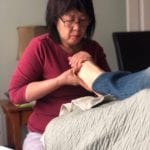
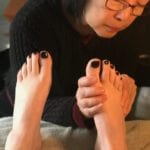
At all sessions, clients are fully dressed, but the socks and shoes are removed.
Feet and/or hands then wiped with hand wipes.
The client has the option to lie on a massage table or sit in an anti-gravity chair for the session.
Powder and lotion can be used during the session.
What Will I Feel During a Reflexology Session?
Many people find sessions, for the most part, very relaxing. It is not uncommon for clients to fall asleep. Some will begin to perspire due to toxins releasing.
The pressure that applied to the feet and hands is firm, but not painful. If there are tender spots, many times, these are signs of energy blocks at the corresponding body points. The Reflexologist will continue to work the tender spots until energy blocks are released. At any time if the pressure becomes too uncomfortable, let the Reflexologist know.
For people who have ticklish feet, no need to worry, the pressure is a firm touch.
How Will I feel After a Healing Session?
Directly after a session, clients may feel very rested and in a relaxed state of mind. It is the responsibility of the client to ensure that she or he is fully alert before proceeding to drive a car.
How Many Reflexology Sessions are Needed Before I See Results?
Clients may see results after one or two sessions. For maximum results, it is suggested that clients have one session per week for four to five consecutive weeks. At the end of the fourth session, an evaluation will take place for health improvement, sessions then are determined to be spaced out.
Recent Posts
 My #fish #Children are #happy #happyMy #fish #Children are #happy #happy […]
- My new #banner. #healingplacemedfieldMy new #banner. #healingplacemedfield […]
- Healing Place 14th year Celebration! Please join m…Healing Place 14th year Celebration! Please join me […]
- Taking pictures for my upcoming booklet Foot Refle…Taking pictures for my upcoming booklet Foot […]
- If you feel Nauseous and dizzy, try this hand refl…If you feel Nauseous and dizzy, try this hand […]
- Neutralizing Negative Energy in the Workplace – FR…Join Helen Chin Lui for a Lunch and Learn Metro […]


Know Your Chakras – The Book
Recent Comments